Bulk Carrier Freed After Prolonged Grounding Near Gladstone, Australia
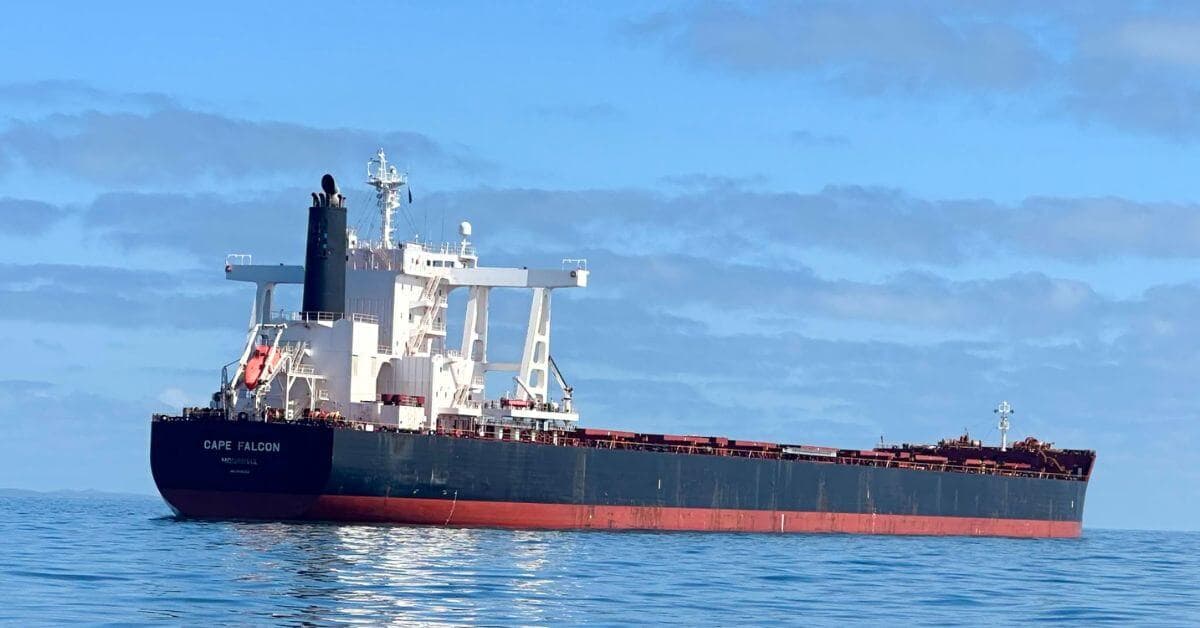
A massive bulk carrier has been refloated after spending six days aground near Gladstone, Queensland, on Australia’s east coast.
The vessel has been detained in Australia as the authorities there carry out inspections and investigations of the grounding.
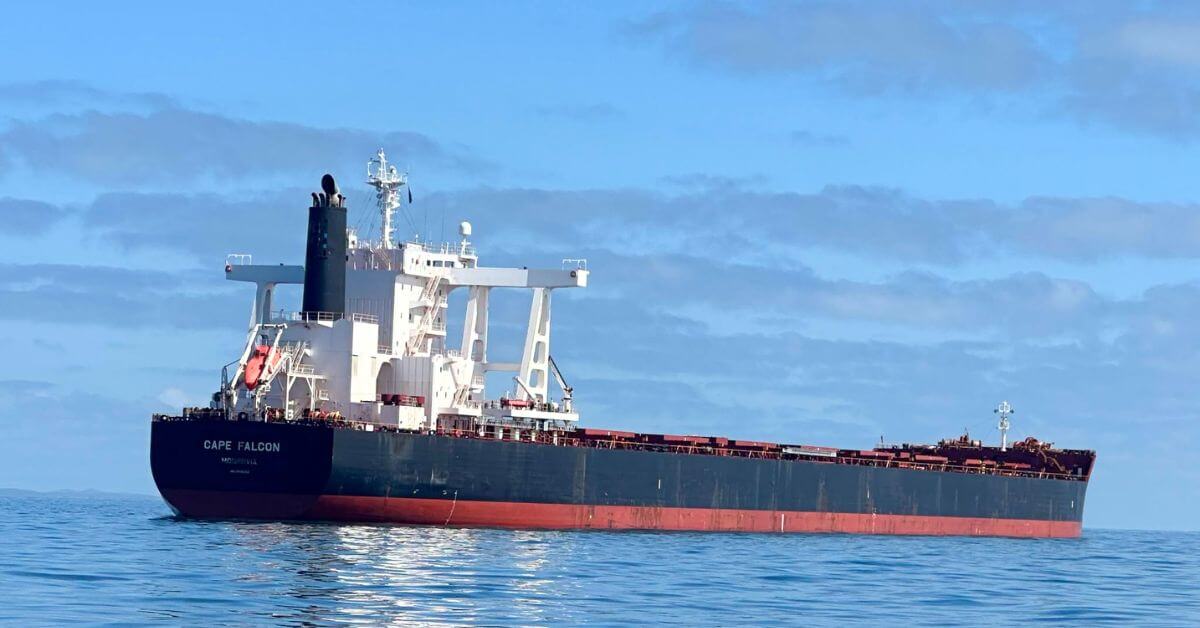
The 182,066 dwt Liberian flagged Cape Falcon was successfully floated during high tide on Thursday, September 24. Two previous efforts to float the ship were not successful.
The grounding disrupted some vessel movement in Gladstone as maritime assets like harbour tugs and pilots were deployed to rescue the grounded ship.
According to Maritime Safety Queensland (MSQ), vessel movements and port operations in the area were gradually being restored to normal.
The ship has been relocated to the N11 anchorage to undergo further inspections.
The Australian Maritime Safety Authority (AMSA) will decide when the vessel can return to service after confirming that it meets the required safety and regulatory standards.
The Cape Falcon which was constructed in 2022 ran aground in the Gladstone area on September 18 while approaching a designated bunkering anchorage at the port.
The ship grounded at around 15:10-15:42 local time, some six nautical miles east of Port of Gladstone. The ship had just left the Hay Point Terminal and was fully loaded.
Harbour tugs and a pilot initially tried to refloat the ship, but the attempts were unsuccessful. A salvage plan was later prepared, with several harbour tugs involved in the recovery operation.
The ship was eventually freed during the morning high tide on September 24, prior to a refloating operation which was scheduled to take place later that day.
Following the operation, the Regional Harbour Master instructed the vessel to move to the N11 anchorage, where the condition of the vessel will be evaluated.
No injuries, hull breaches or pollution have been reported.
According to AMSA, Cape Falcon is currently held under the Navigation Act until the vessel is determined as seaworthy.
The vessel must meet all required safety and regulatory standards before it can resume operations. The ATSB is also investigating this incident as a serious marine accident.
Among others, investigators are gathering information from the voyage data recorder, vessel tracking, weather, and the records of the vessel’s crew, operator, and maintenance.
Currently, the investigation is at the evidence gathering phase. A preliminary report of the investigation will be ready in about two months. The final report will be issued once the investigation is complete.
According to MSQ, additional tests will be conducted to evaluate the condition of the hull of the vessel following the refloating operation.
The vessel is owned by Shoei Kisen Kaisha of Japan, based on information from Equasis and Clarksons. It has an insurance policy with NorthStandard of the UK.
There are no records of any port state control detentions of the Cape Falcon. Nevertheless, the latest inspections in Australia that were conducted in October showed that there was an issue with its lifeboats.
References: safety4sea, gladstonetoday
Want to read more?
Check out the full article on the original site